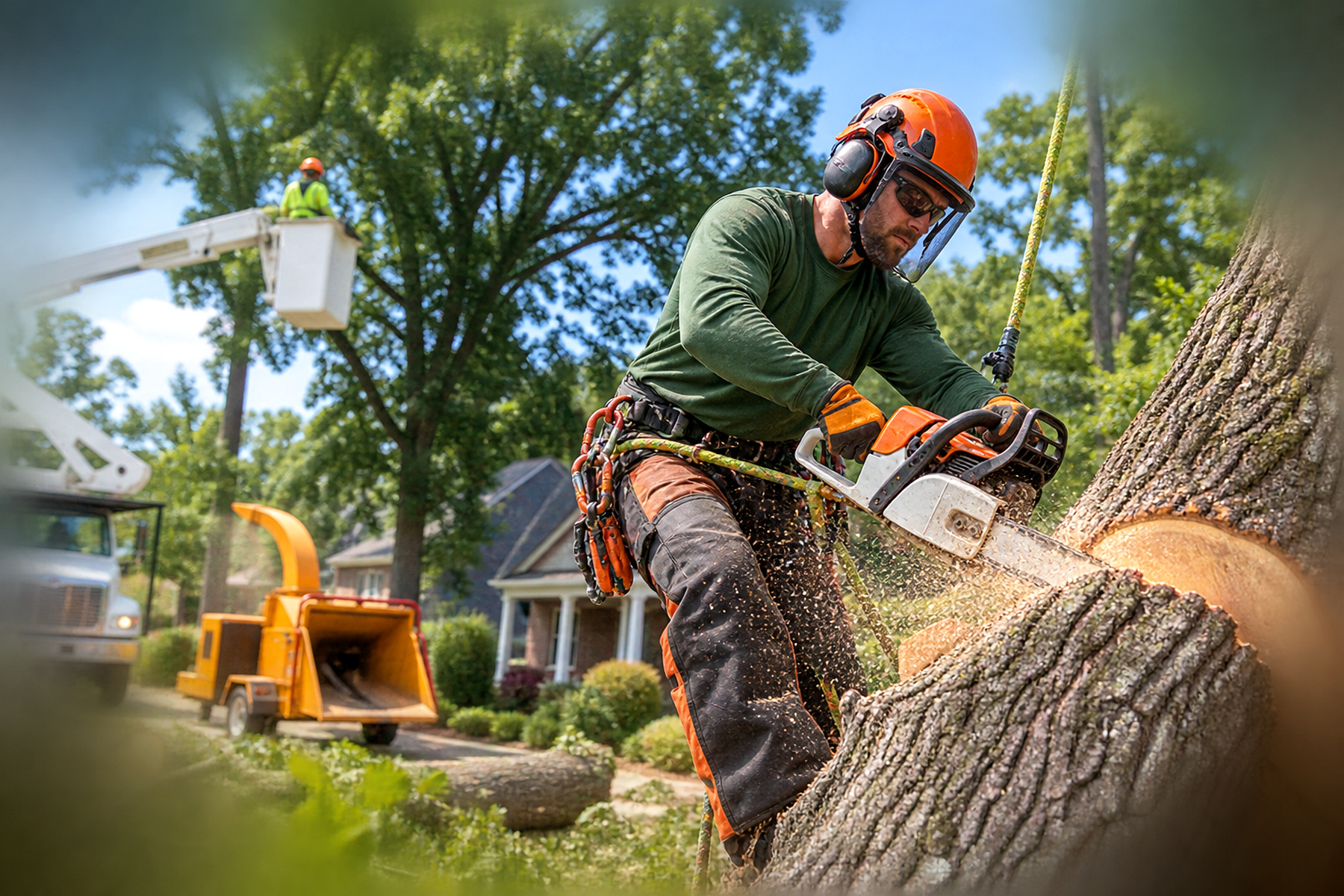
Insured, vetted tree removal across the Charlotte metro, starting with a real assessment of the tree and its access.
Tree removal isn’t priced by size alone. A 60-foot oak in an open backyard with clear crane access is a different job — and a different price — than a smaller tree wedged between a house and a fence line, or leaning toward a power line where only utility-approved crews can legally work. Skipping this assessment is the most common reason a "quick removal" quote turns into a surprise change order once a crew actually shows up.
We start every removal the same way: an insured provider assesses the tree’s condition, its proximity to structures and power lines, and the access a crew would realistically have to work safely, then scopes the actual job — felling method, rigging if needed, cleanup, and stump handling — before pricing is finalized.
A tree that can be felled in one direction into open space is a straightforward job. A tree that has to be taken down in sections — because it’s too close to a roof, a fence, or a power line to fell whole — takes more time, more equipment (often a crane or bucket truck), and more insurance exposure, which is reflected in the price. Trees within a set clearance of power lines legally require Duke Energy coordination or a utility-approved crew before any work starts — a safety and legal requirement, not an upsell.
A real look at the tree’s condition, access, and hazard level, not a phone-quote guess.
Felling or sectional removal, with rigging equipment where access requires it.
Branches, trunk sections, and debris removed from the property.
Grinding available as part of the job or separately.
Pricing depends mainly on tree size, access, and hazard level. A small-to-medium tree in an open yard with easy access typically costs the least; large trees requiring crane work or removal near structures or power lines cost more. See our full cost breakdown for real factors and ranges.
Every provider in our network carries real liability insurance and is checked against a real work history before we route a lead to them. We match your job to a provider suited to it — a routine removal in an open yard and a hazardous removal next to a power line aren’t the same job, and we don’t treat them like they are.
Insured, vetted tree removal across the Charlotte metro, starting with a real assessment of the tree and its access.
Request a free estimate and tell us about the tree and its location.
We match you with an insured local provider suited to your job.
They assess the tree on-site and confirm the real scope of work.
The removal happens, with debris cleanup included.
Storm damage is the most frequent driver — Charlotte’s summer thunderstorm pattern and occasional hurricane remnants can crack or uproot even healthy-looking trees. Disease and pest damage is another common cause: Southern pine beetle can kill loblolly and shortleaf pines relatively fast once an infestation takes hold. Bradford pear removal has also become common region-wide — the species is now classified invasive in North Carolina, and the state has run cost-share removal programs encouraging homeowners to replace them.
It depends on the tree and where it sits — see our Permit Guide for the real rules on right-of-way and protected trees.
Trees within a set clearance of power lines require Duke Energy coordination or a utility-approved crew before work starts — your matched provider handles this as part of the job.
A straightforward removal in an open yard usually takes a few hours. A large or hard-to-access tree can take a full day or more.