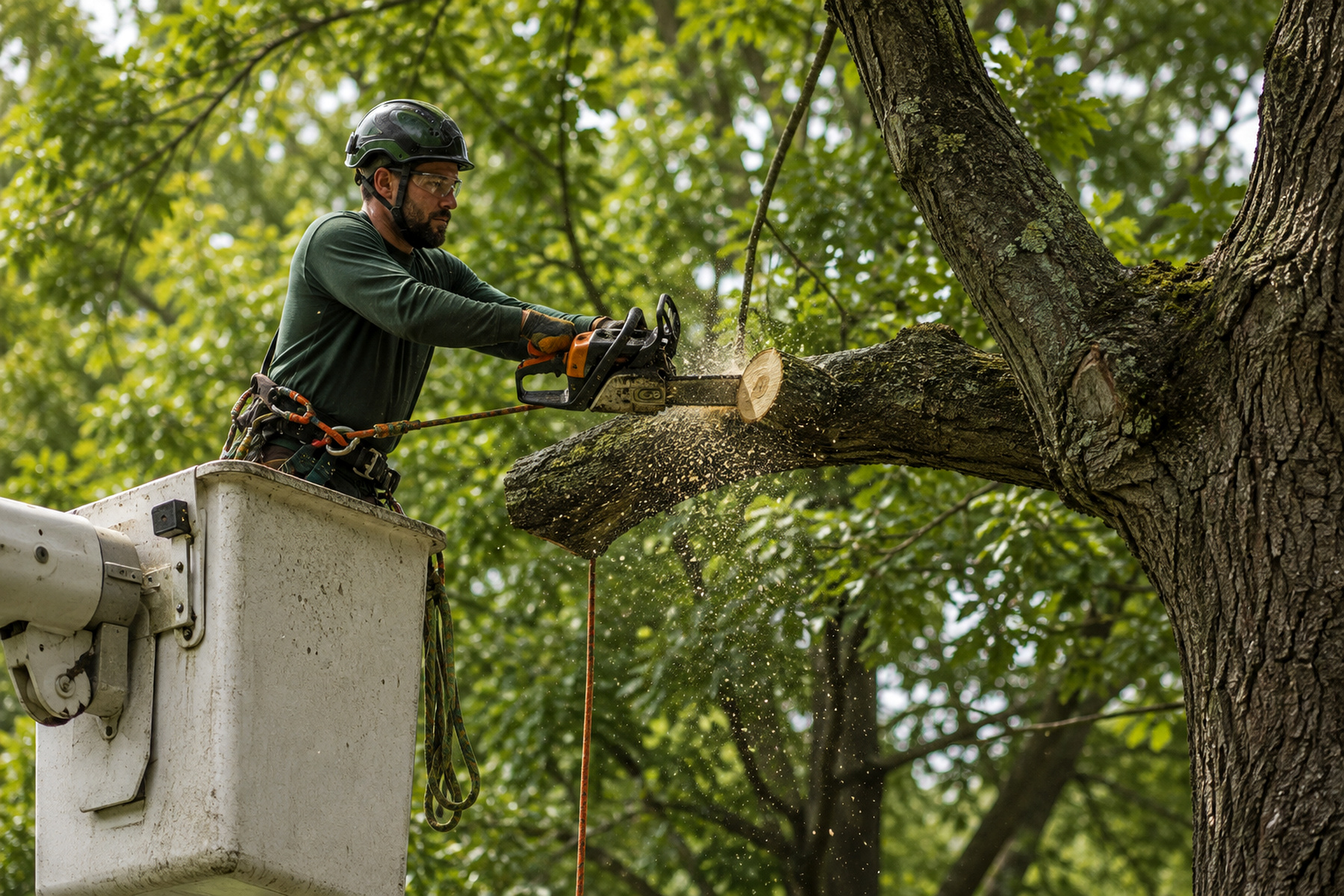
For most trees in the Charlotte area, late winter to early spring (roughly February through early April) is the best window for pruning. Trees are dormant, which means they heal wounds more effectively as new growth begins. The exception that matters most locally: oaks.
Oak wilt is a real, serious disease risk in North Carolina, and it spreads primarily through beetles that are most active from spring through early summer. Pruning an oak during this window creates fresh wounds that can attract those beetles and let the disease in — which is why arborists generally avoid pruning oaks from roughly March through July.
Crape myrtles are also best pruned in late winter (roughly February to March) — but the more common mistake isn't timing, it's technique. Cutting crape myrtles back hard to bare stubs (sometimes called "crape murder") is a widespread but poor practice: it delays flowering, weakens branching over time, and can actually increase insect and disease problems.
Beyond the dormant-season window, there's a second reason to trim: reducing storm risk before Charlotte's summer thunderstorm season. A genuinely hazardous limb should come down whenever it's identified, not held for the "ideal" season.
| Window | What to Know |
|---|---|
| February–early April | Best general pruning window — most species, dormant season. |
| March–July | Avoid routine oak pruning (oak wilt risk); emergency oak work still happens, with cuts sealed. |
| Late winter (Feb–March) | Best window for crape myrtles specifically — prune selectively, not to bare stubs. |
| May–October | Storm season — address hazardous dead/weak limbs as they're identified. |
Yes — a genuinely hazardous or broken limb should be addressed right away regardless of season.
It weakens the tree’s branching structure over time and can increase insect and disease problems.
No — dormant-season pruning is actually easier on most trees than growing-season pruning.
Sourced from NC State Cooperative Extension guidance on crape myrtle pruning and regional arborist guidance on oak wilt risk timing in North Carolina, current as of 2026.
Request a free estimate and we’ll match you with a provider who can assess your specific tree.